I get the biggest ick when countdown talk is all a group fitness instructor offers during a session. “Not much longer, team!” “Only 10 seconds left!” “4, 3, 2, 1.” If that’s the only feedback I’m getting, I feel like I’m being encouraged to dissociate.
I don’t move my body to leave my body and chase the finish line.
This piece started from thinking about my own movement preferences, and soon developed into a broader reflection on what people actually deserve when they pay for the opportunity to move their body.
The "Survival" Mindset in Fitness
When an instructor sets the tone that a workout is all about survival, that’s enough to deter me from ever returning to that class or studio—or at least that trainer, if I can avoid it.
I’m not saying countdown talk is never a helpful strategy to support those wanting to push the limits of their capacity. But when it’s used just to fill the air, or on the assumption that it’s all anyone in the room cares about, it isn't just a failure of the craft I hold so dear. It feeds into a larger cultural issue that favours outcomes over process: the idea that exercise is only worth the physical results you gain, or how you feel at the end. And that paying for fitness means chasing eight-week results rather than an ongoing opportunity to develop and maintain a meaningful connection with your body and how you move.
It’s probably not always a trainer’s intention to reinforce that "no pain, no gain" bigger picture (although plenty still engage with diet-culture rhetoric). Still, when you know—both personally and professionally—how much more a teacher can offer to guide a session, it’s hard not to judge.
What Good Movement Coaching Looks Like
I understand the reality of coaching bigger classes, having taught many myself over the years. When one instructor is holding the energy of 20+ people while making sure everyone is safe and following the movement task, there isn’t always the capacity for specific, hands-on adjustments for every single person.
What I’ve never understood, however, is why that means other forms of feedback are so rarely present. Once safety and baseline guidance on technique are in place, an instructor can use what they see and feel in the room to help clients navigate the level of effort being asked of them.
Cues That Connect You to Your Environment
Instead of just watching the clock, teachers can offer tactile and spatial cues that anchor you into the architecture of your movement and the apparatus around you:
"Squeeze the bar."
"Drag the floor underneath you with your heels."
"Spread your fingers and push the floor away."
"Keep the ball still on the Reformer carriage."
"Exhale right here to find your support."
Normalising Sensation and Offering Self-Adjustments
Instructors can also validate what might be happening for the people in front of them—muscle fatigue, body heat, sweat, shaking, feeling awkward in a new exercise.
I really wish these physical sensations were normalised and called out more often, paired with practical suggestions on how to manage them. This could sound like:
"Slow down to catch your breath."
"Focus on quality over quantity if your muscles are fatiguing."
"Make the movement smaller if you’re feeling unstable."
"Speed up if you want to lift the cardio challenge."
Being validated and given explicit permission by your instructor to self-adjust reduces the shame and external pressure to push past your limits, empowering you to listen to your body.
Why Your Relationship to Effort Matters
People respond differently to the sensations of an exercise. A racing heart, burning muscles or heavy breath might feel motivating to one person, overwhelming to another, and unsafe to someone else, depending on a multitude of factors.
I personally have a distaste for high-intensity cardiorespiratory exercise. But that doesn’t stop me from wanting to do it. I never enjoyed repeating very physically demanding dance routines over and over again, but I loved the experience of expressing a story through my body, and understood how important stamina was for performance day. I also don’t like to run, but I do like to run along the river when it’s sunny and I can hear the birds and the water trickling along the rocks.
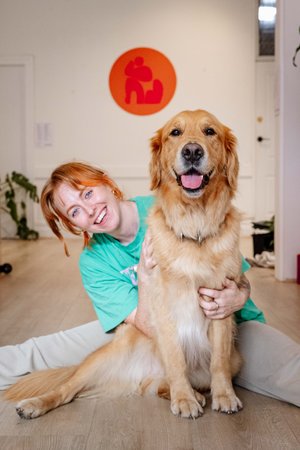
The effort of the task is the same, but my relationship to it isn’t. I walk every day knowing that it is good for my brain and body, but it’s also my favourite activity to bond with my pup Bear, and now my daughter Scottie.
How Autonomy Makes You Want to Move More
As fitness and pilates professionals we have the power to shape an experience that makes room for everyone’s version of challenge and support, and one that empowers their sense of capability and self-trust, while reducing the risks of shame and comparison.
This is the part of our craft whose impact the wider world might not fully appreciate. But I also think a lot of fitness professionals aren’t fully aware of the influence they have on people’s self-worth, self-esteem and self-efficacy. We see our clients week after week, which makes us a regular presence in shaping what they believe exercise is, what it isn’t, and whether it’s for them. What they learn about exercise, they learn about themselves.
Offering options to dial intensity up or down gives each person permission to meet their effort on their own terms. Exercise science research consistently shows that autonomy-supportive environments strengthen intrinsic motivation. Which is one of the strongest predictors of whether people keep exercising long term. Studies on self-selected intensity also suggest that when people choose their own effort, they often land in a range that still delivers meaningful health benefits, while reporting more positive feelings during exercise.
Of course some will choose too little or too much, but choice works best when it comes with guidance on what each option feels like and what you’re wanting to achieve, as in my suggestions above.
You Deserve More Than Just Watching the Clock
If your current instructor or fitness space offers you nothing but the clock to cope, you’re not alone if you find it frustrating, uninspiring, or irrelevant to your body. You’re allowed to want more from your movement practice. You deserve more—and there is so much more out there.
Experience Movement on Your Terms at Rosy Movement
At Rosy Movement, our boutique Pilates and Yoga studio in Collingwood is designed to be a calm, mirror-free, and weight-inclusive environment where you never have to "survive" a workout.
Ready to feel connected to how you move? Explore our Get Started Bundle of 28 Days of Reconnection Package at our 20 Smith Street, Collingwood studio today.